
Official rules
Race rules
The rules that make Chicamocha Canyon Race a safe, fair race that respects the canyon. By registering you agree to follow them.
How to read these rules
A marked, semi-self-sufficient race with values
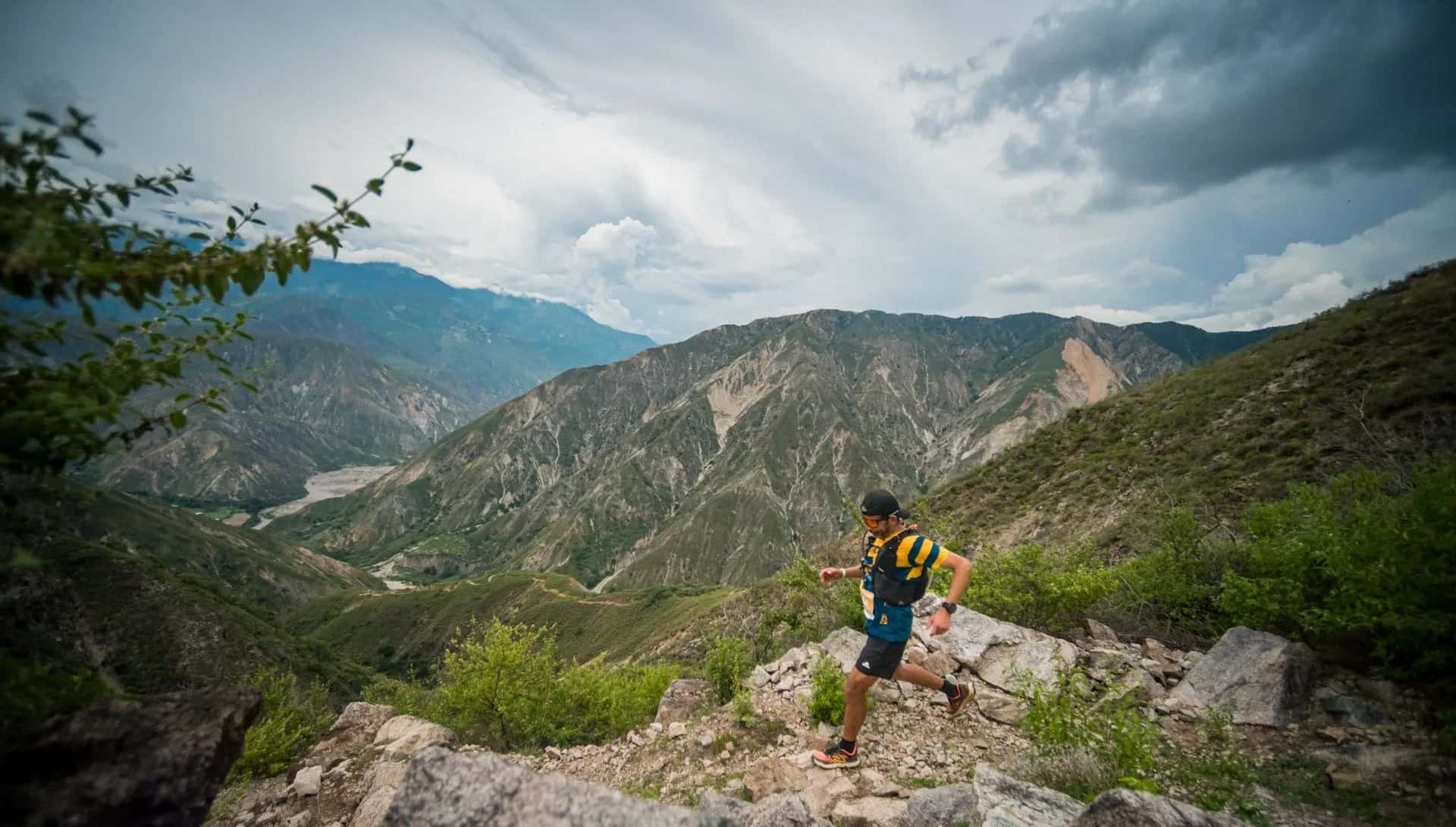
Chicamocha Canyon Race is a trail running race through the Chicamocha Canyon and several towns in Santander, based in San Gil. It is properly marked, run in semi-self-sufficient format, and built on the values of authenticity, humility, fair play, equity, solidarity and respect for yourself, for others and for the environment.
The organizing committee is an ITRA member, ITRA endorses the course, and the race follows the ITRA – IAAF agreement, rule 252 of the IAAF competition rules and the World Athletics technical rules (2024 edition).
This page presents, chapter by chapter, the current official rules (version of June 11, 2025), together with the requirements and categories published for each distance. The full official document (in Spanish) is available to download at the end.
- By registering you accept the rules, the manuals and the purchase, change and refund policy.
- Race management may change the rules, times and routes for logistics or safety reasons, even during the race. Every change is announced on the official channels.
Chapter 1
Trail running according to ITRA
What is trail running?
According to ITRA, it is a pedestrian race open to all, in a natural environment (mountain, forest, plains), with as little asphalt or paved road as possible, which should not exceed 20% of the course.
Terrain can vary (dirt roads, forest trails, single track) and the course must be properly marked. The race is ideally, but not necessarily, self-sufficient or semi-self-sufficient, and is run with sporting ethics, loyalty and solidarity with the environment.
Since 2015, through the ITRA – IAAF agreement, trail running has been recognized as part of athletics, within the ultra discipline, governed by the International Association of Ultrarunners (IAU).
How are trail races classified?
By effort-kilometers: distance in kilometers plus one hundredth of the elevation gain in meters, rounded to the nearest whole number. Example: 65 km with 3,500 m of climbing = 65 + 35 = 100 effort-km.
Category | Distance | Effort-km | ITRA points | Approximate winning time |
|---|---|---|---|---|
XXS | Trail S (under 42 km) | 0 – 24 | 0 | 1 h |
XS | Trail S (under 42 km) | 25 – 44 | 1 | 1 h 30 – 2 h 30 |
S | Trail S (under 42 km) | 45 – 74 | 2 | 2 h 30 – 5 h |
M | Ultra Medium (42 to 69 km) | 75 – 114 | 3 | 5 – 8 h |
L | Ultra Long (70 to 99 km) | 115 – 154 | 4 | 8 – 12 h |
XL | Ultra XLong (100 km or more) | 155 – 209 | 5 | 12 – 17 h |
XXL | Ultra XLong (100 km or more) | 210 or more | 6 | over 17 h |
The winning time is indicative, for an international-level winner (ITRA performance index of at least 830); it is not a required mark.
For World Championships, World Athletics uses two categories: short, 35 to 45 km with at least 1,500 m of elevation gain, and long, 75 to 85 km.
What do "properly marked" and "semi-self-sufficiency" mean?
- Properly marked: runners receive enough information to complete the course without getting lost. This includes physical markings (flags, ribbons, markers, signs), permanent markings, the GPS track or map directions.
- Self-sufficiency or semi-self-sufficiency: runners must be autonomous between aid stations in terms of equipment, communications, food and drink.
The ethics charter and the values of trail running
ITRA members from five continents set out a charter describing the spirit of the sport: pushing yourself in beautiful, wild natural settings, sharing the passion with runners and volunteers, the pride of being a finisher and helping each other to the line.
- Authenticity: running in contact with nature, without artifice, in an environment that demands a lot from body and mind, with human relationships based on simplicity and respect for differences.
- Humility: acknowledging natural risks, however thorough the organization's measures, and knowing your own limits, to the point of being able to give up a race.
- Fair play: loyally accepting the written rules and their spirit, never cheating, rejecting all doping, and practicing mutual help and solidarity.
- Equity: the same conditions, rights and obligations for every athlete. Attention to the elite must never affect other runners.
- Respect: for others (local people, their culture and customs, and everyone you meet on the trail), for yourself (don't put your health at risk, no doping or self-medication abuse) and for the environment, which is fragile.
- Solidarity: always help anyone in danger or difficulty, in any circumstances.
Are there special conditions for elite athletes?
No. Every athlete has the same conditions, whether elite, professional or amateur. Conditions in the assistance zones are the same for all runners: there is no special crew access for the elite.
Chapter 2
Organization, course, timing and checkpoints
A. Who runs and judges the race?
- Jury: holds first-instance authority to sanction a participant's conduct, and reviews and rules on protests.
- Checkpoint (PC) judges: monitor the runners' passage and correct participation, enforce the rules, report anything they cannot resolve to the jury or race management, and may inspect mandatory gear whenever they see fit.
- Course judges: may be anywhere on the course, monitor compliance with the rules, report infringements and may act as checkpoint judges.
- Race management: coordinates logistics and safety. The race director is the highest authority of the competition.
- Staff and volunteers: handle logistics and the smooth running of every part of the competition.
B1. Fair play
Everyone involved in the race must act with fairness, honesty, sportsmanship and camaraderie, and respect other competitors, the organization, the press, the authorities, spectators and local residents. When a faster runner catches you, let them pass.
B2. Course and markings
The race has four distances (half marathon, marathon, 80K and 100 miles), two start points, several checkpoints and two finish points.
- The course is marked with orange ribbons with a reflective strip and yellow reflective stickers. There are more markers at forks and junctions.
- At important junctions, the right way is marked with a ribbon, arrow or sticker in the direction to follow; the wrong way is left unmarked or closed off with a line of lime on the ground. You'll see samples at kit pick-up.
- All runners must follow the marked trail.
- Race management may change the course for safety or timing reasons, announcing it at the start, at the previous checkpoint or at the point of the change.
- If the race is stopped, rankings are based on arrival time at the last checkpoint before the stoppage; runners already past it are ranked by their time at the checkpoint where the race was stopped.
B3. Race time and cut-offs
- Timing is real time: start time, checkpoint splits and finish. Time penalties are added to your final time.
- If you miss a checkpoint, you must go back on your own, restart from there and pass again through every following checkpoint. Previous passages are voided and the cut-offs that apply are those of your new passage.
- Cut-off: the time limit to leave a checkpoint. Arrival time at a checkpoint is for information, and used for rankings if the race is stopped.
- When a checkpoint closes, all organization services there end, except medical emergencies or search and rescue.
- Anyone who does not record leaving a checkpoint before the cut-off is out of the race. Waiting time due to admin, congestion or safety procedures is not given back.
- The organization may change cut-off times for safety reasons or unforeseen events.
B4. Checkpoints (PCs)
Checkpoints are at locations set by race management. Passing through them is mandatory and in ascending order (PC1, PC2, PC3…). Anyone who cannot prove their passage through one or more checkpoints will be disqualified. The judge records your number and any remarks on the control sheet; it is your responsibility to check that your details are recorded correctly.
B5. Timing and start
- Chip timing gives your race time plus penalties.
- Be at the start one hour early. If you are late, you may start up to 30 minutes after the gun, but your time counts from the official start; more than 30 minutes late, you can no longer start.
- Each distance has its own start and its time is taken from its own start time.
B7. Transport and withdrawals
- When a distance does not start or finish in San Gil, the organization provides transport from or to San Gil. If you decide to travel on your own, you do so at your own risk and must still be at the start one hour early.
- Be at the bus departure point half an hour early. The organization does not transport late arrivals.
- If you withdraw voluntarily, report it as soon as possible. Every runner who drops out arranges their own transport, and anyone who drops out without reporting it bears the cost of any search and rescue operation.
B8. Chip and bib
- The chip is mandatory, provided by the organization and attached to your bib. Both are your responsibility: if you lose them, you won't have a race time. In that case, tell the judge at each checkpoint and at the finish so your time is recorded manually.
- The bib must always be worn on the front and visible; otherwise the system may not read the chip. Anyone not wearing their bib on the front and visible may be disqualified, with no time or ranking.
Chapter 3
Participants: requirements, categories and image rights
C1. Registration and checking your details
- Register following the procedure published on the website. By registering you accept the race rules, manuals and policies.
- Spots go to the first athletes who complete the process, within the places opened by the organization.
- You provide your information and are responsible for checking that your name, ID, bib number, category, distance and division (men or women) are correct. Report any issue or change in person to the organization by 6:00 p.m. the day before the race. Changes made at kit pick-up or outside the deadlines do not change your bib or wristband.
Age and participation of minors
- Participants must be over 18. Minors are accepted with the minor participation authorization signed by their legal guardian, which is also presented on paper at kit pick-up.
- Children under 12 always run with an adult; both must be registered. The organization may waive this if the child proves experience, requests it and meets all other requirements.
- The marathon requires a minimum age of 16. Distances over 50 km require runners to be over 18.
- The organization reserves the right to admit minors to long distances.
- Age is checked against your ID or passport. For categories, what counts is your age on December 31 of the race year.
Requirements and documents by distance
Every runner uploads to the runner platform, before kit pick-up, a copy of their ID and the signed liability waiver.
Distance | Minimum age | Additional requirements |
|---|---|---|
Half marathon | Minors with authorization | Minors run with an adult who is also registered |
Marathon | 16 | Minors present the authorization and run with an adult who is also registered |
80K | 18 | Finisher certificate from a trail race of at least 42 km in recent years, plus a medical certificate |
100 miles | 18 | Finisher certificate from a trail race of at least 70 km in recent years, plus a medical certificate |
- Medical certificate: issued by your doctor after a general check-up, dated no more than three months before, stating that you are in optimal physical condition for a high-performance event.
- Race certificate: training sessions proving the distance are also accepted; the record must show distance, time and date.
- If you cannot collect your kit in person, the authorized person presents the third-party authorization form and your mandatory gear.
Age categories
Age-group awards are medals, for women and men. Your age is the one you will be on December 31 of the race year.
Distance | Women | Men |
|---|---|---|
100 miles | Single category | Up to 39 · 40 to 49 · 50 and over |
80K | Up to 39 · 40 and over | Up to 39 · 40 to 49 · 50 and over |
Marathon | Up to 39 · 40 to 49 · 50 and over | Up to 39 · 40 to 49 · 50 and over |
Half marathon | Up to 39 · 40 to 49 · 50 and over | Up to 39 · 40 to 49 · 50 and over |
The women's 100-mile category is a single group, and the 80K has no women's 50+ category, because of the number of female runners in those distances. The 80K and 100 miles also have a single pairs category.
Hikers format (half marathon)
- It is one more format within the half marathon: the same course from Jordán to Barichara, starting with the half marathon group, with an 8 h 30 min time limit.
- The only difference is that the group is accompanied by two local guides. That does not replace good fitness: you need experience on hikes of more than 15 km, because the course climbs out of the canyon in hot weather.
- Each hiker carries their mandatory gear and their own food and water, and follows all the rules.
- If the guides consider that a participant cannot finish, they must stop at the nearest checkpoint; transport from there is at their own expense, or may carry an extra charge if provided by the organization.
- There are no positions: everyone who finishes gets a finisher medal and is ranked by age within the half marathon results.
Pairs category (80K and 100 miles)
- Two people, regardless of age or gender, in a single category per distance. Each partner meets the requirements of their distance and has the same rights and obligations as any runner, except for these specific rules.
- Starts and finishes: partners start together and stay together the whole way. The team's time is that of the last partner to cross the finish, a checkpoint or a cut-off.
- Help: partners may help each other (pulling, pushing, carrying gear). Mandatory gear is individual and each partner carries it at all times.
- Withdrawal: if one partner drops out, the other must accompany them to the next checkpoint or until the organization evacuates them in an emergency.
- Continuing alone: a partner who wants to continue alone must be authorized and recorded on the judge's sheet at the nearest checkpoint. They receive a finisher medal and all services, but no official time or ranking.
- Penalties and expulsion: any penalty to one partner applies to the team; if both are penalized for missing gear, the penalties add up. Expelling one partner applies to the team.
- Awards: medals for the top three pairs and in-kind prizes when available. No prize money, and partners are not ranked overall or by age.
Identity fraud
If you do not show up and someone else collects your kit, nobody may race in your name, with or without your bib. Anyone impersonating a registered runner will be disqualified and banned from future editions; if the registered runner authorized it, they receive the same sanction.
C2. Bib, advertising and image rights
- Your race number goes on the front of your shirt or shorts, visible. If you wear a jacket, show your number to the judge at each checkpoint. It may not be altered (for example, cut) or covered with promotional items, and its advertising space must be respected.
- You may display your sponsors on your cap, gloves, pants, non-official shirt and shoes, never on the official shirt. The organization may reject advertising material from sponsored runners.
- The official shirt is not mandatory. If you wear it, keep it in its original condition, with no added advertising or cuts.
- The organization may place the race's and its sponsors' branding wherever it sees fit, including on participants and their gear.
- Image rights: images and comments captured during the race may be used by the organization and its sponsors to promote the event and other brands. Competitors waive any claim over that use. By signing the liability waiver you also authorize the processing of your personal data for institutional and marketing purposes.
C3. Individual responsibility
Each participant is responsible for their own actions and for any breach of the rules by their crew. You decide whether to continue racing, unless the organization excludes you for health or disciplinary reasons. Get the medical check-ups you need to make sure you are fit to race.
Respect for the environment
The canyon is a fragile natural environment and all of us (runners, organizers, sponsors and supporters) commit to protecting its balance:
- Carry your personal cup: drinks are only served in it.
- Carry your waste to the organization's bins. Dropping or not picking up your litter costs a 1-hour penalty.
- Do not collect stones, plants, insects or other objects from the course: that also costs 1 hour.
- Choose public or shared transport.
Read the full environmental plan in Eco-responsibility.
Chapter 4
Mandatory gear by distance
| Item | 100 miles | 80K | Marathon | Half marathon |
|---|---|---|---|---|
| Race bib with timing chip, worn on the front and visible | Yes | Yes | Yes | Yes |
| Mobile phone with call credit | Yes | Yes | Yes | Yes |
| Windproof or waterproof jacket with hood | Yes | Yes | Recommended | Recommended |
| Headlamp or flashlight with batteries | Yes | Yes | Yes | — |
| Spare batteries for the light | Yes | Yes | Yes | — |
| Hydration system, 2 liters minimum | Yes | Yes | — | — |
| Hydration system, 1.5 liters minimum | — | — | Yes | Yes |
| Survival blanket | Yes | Yes | Yes | Yes |
| Whistle | Yes | Yes | Yes | Yes |
| Emergency food reserve | Yes | Yes | Yes | Yes |
| Cash for emergencies | Yes | Yes | Yes | Yes |
| Elastic bandage, 3 cm × 1 m | Yes | Yes | Yes | Yes |
| Personal cup | Yes | Yes | Yes | Yes |
Recommended for all distances: trekking poles, knife or penknife, thorn remover, sunscreen, petroleum jelly, GPS, cap or visor, sunglasses and long clothing (pants and sleeves) against thorns and nettles. Each missing mandatory item at a gear check costs a 20-minute penalty.
Chapter 5
Gear, aid stations and crew access
C4. Mandatory gear checks
- The list of mandatory and prohibited gear is published on the website and is part of these rules.
- You must show it whenever a course judge, checkpoint judge or authorized person asks, anywhere on the course, including the start and finish. Judges may refuse a runner for missing or substandard gear.
- Missing mandatory gear is penalized with time or by holding the runner at the checkpoint, depending on how serious it is.
- Presenting your complete gear is mandatory to receive your kit. Before that you must have completed the information form, uploaded your documents and signed liability waiver, and have a 100% confirmed entry.
Aid stations
The organization sets up aid points on the course, normally at the mandatory checkpoints. Each one is described before the race, with the products and services it offers. Drinks are served only in the runner's personal cup. All runners receive the same attention, depending on the staff available and the number of runners at that moment.
Authorized assisted checkpoints (PCAA)
- These are clearly defined assistance points where family or friends may help their runner with food, drinks, massage, information and clothing. They are listed in each distance's technical information.
- For comfort and space, one supporter per runner may enter each PCAA, and only once the runner is arriving at the checkpoint.
- Supporters must follow the organization's rules on discipline, the environment and respect for runners, staff and the community. The runner is responsible for their behavior.
Supporters and unauthorized assistance
- Friends, family and members of the public may not run the course or enter competition areas. They may only accompany a runner from 100 meters before a PCAA or the finish to 100 meters after it. Any other pacing counts as unauthorized assistance and is penalized.
- Leaving objects on the course for a runner to pick up, or collecting items a runner leaves behind, is prohibited.
- Outside the PCAAs, runners may not accept food or drink from members of the public, except spontaneous offers from local residents. You may buy food at shops along the way.
- Runners may not be pushed or towed by other runners or outsiders.
Runners accompanied by unregistered people
A runner who is accompanied or helped on all or part of the course by unregistered athletes will be eliminated. Unregistered people using the organization's services (transport, food, drinks, medical or rescue services) will be reported and removed by the authorities, and any costs they generate are borne by the runner they were accompanying. The organization may pursue those costs through legal channels and make the case public.
Drop bags
- In the 80K you have one personal bag at one point on the course; in the 100 miles, two bags at strategic points. The locations are published in each distance's information.
- You may pack food, drinks, shoes, clothing, other race items or spare mandatory gear. Everything must go inside the bag, which only the runner opens and closes: loose items are not accepted.
- The organization transports the bags and returns them at the finish on showing your number. Since contents are not checked, the organization is not liable for total or partial loss or damage.
Special diets for medical reasons
If a certified medical condition means you need different food or drinks from those provided, you must be 100% self-sufficient (except at PCAAs) or arrange with the organization, 24 hours before the start, to have your food taken to the aid stations. This is an exceptional case and has lower priority than the organization's own transport.
Finish area and information for families
- The finish area is reserved for staff and arriving runners. Contact with the public and families takes place outside the marked zone.
- Families, friends and the public receive official information only at the start and finish; no participant information is given by phone. The organization posts general updates on social media and the website, and a live results page shows which checkpoints each runner has passed.
Awards
- The ceremony is open to the public, at the Plazoleta Guanentá of Centro Comercial El Puente, and streamed live.
- Prize money and sponsor prizes for the top three men and women in the overall ranking of each distance. Not for age groups.
- Medals for the top three in each age group, women and men.
- Raffles for every participant who takes the start.
See this edition's details in Awards.
Chapter 6
Safety and emergencies
Incident and emergency phone numbers
Two dedicated numbers are printed on your bib and shown at kit pick-up. Save them in the phone you carry during the race.
- Black number, course incidents or withdrawal: questions, minor health issues, important notices or any situation that needs advice and follow-up without a rescue. Also to report a voluntary withdrawal outside a checkpoint.
- Red number, emergencies: when medical care or rescue must be assessed or provided urgently. Life-threatening cases belong here.
These lines only operate during race hours. Do not share them with family or use them for general questions (schedules, kit pick-up): use the website, social media or the public helpline for that. During the race, do not call the organizers' personal phones.
Voluntary withdrawal protocol
- Call the incidents number, give the reason for withdrawing and say where you are heading.
- Go to the nearest checkpoint, report to the judge and complete the withdrawal there.
Incident protocol
- Report your case to the incidents number.
- The organization will provide support or follow-up.
- Follow their instructions.
- Go to the next checkpoint if you are still racing, or the nearest one if not, and report to the judge.
Emergency protocol (SOS)
- Report the case to the emergency number.
- The organization will provide support and launch a rescue operation if needed.
- Follow their instructions.
- If possible, go to the nearest checkpoint and report to the judge.
If the case is very serious, give your location: the organization will launch a rescue and medical operation depending on availability, terrain and possible access.
What should I say on the call?
- Who you are: name, bib number and distance.
- Where you are and which checkpoint is nearest.
- What happened.
- How many people are involved, who they are and the condition of each.
- Your plan of action.
- What the most urgent need is.
Mandatory assistance and medical care
- Every runner must help another runner in an emergency. Failing to do so leads to elimination.
- On-course medical support includes care and ground transport to the nearest care point. If the emergency requires it, transfer is to the facility covered by the organization's medical assistance insurance; any other transfer is paid by the runner.
- Care depends on availability, distance and access. With several simultaneous cases, priority goes by severity. Weather or safety conditions may force race management to hold some runners even if others have already passed.
- The medical team decides independently whether a runner may continue, and records it in writing on the judge's sheet at the nearest checkpoint.
Chapter 7
Penalties, judging and protests
E1. Types of sanction
- Time penalty: added to your race time.
- Disqualification: you are removed from the rankings but may continue racing.
- Elimination: you must leave the race.
Every sanction is recorded on the sheet of a checkpoint judge or race management.
Time penalties
Infringement | Penalty |
|---|---|
Altering, cutting, swapping or not wearing your race number | 20 minutes |
Altering or cutting the official shirt while racing in it | 1 hour |
Receiving assistance on course or at unauthorized points from people outside the race staff | 1 hour each time |
Dropping or not picking up your own litter | 1 hour |
Collecting stones, plants, insects or other objects on or near the course | 1 hour |
Missing a mandatory gear item at a check | 20 minutes per item, at each check |
When is a runner disqualified?
- Not recording passage through one or more checkpoints (no chip read and no entry on the judge's sheet).
- Using any means of transport, even to return to a missed checkpoint.
- Damaging or destroying facilities in the competition areas.
- Breaking the mandatory trail rules.
- Being pushed, pulled or held by another runner, or pushing, pulling or holding another runner (except within the pairs category).
- Being accompanied by an unregistered person for all or part of the race.
- Being more than 30 minutes late for the start (you may not start).
- Not wearing your bib with chip on the front and visible.
When is a runner eliminated?
- Unsporting, aggressive or destructive behavior, such as insulting or attacking other runners, staff or the local community.
- Hostile, violent or disrespectful behavior towards the media.
- Deliberately acting against these rules.
- Failing to help a runner in an emergency.
- Racing while drunk or under the influence of drugs or other substances that endanger their own safety or that of others.
The organization is not responsible for an eliminated runner, who must leave the race by their own means.
E2. Judging
The jury sanctions every breach with time penalties, disqualifications or eliminations; validates checkpoint judges' rankings and withdrawals; and may add and announce details not covered by the rules, as well as define and apply penalties not listed in them. A runner may be sanctioned even after the race has ended if the jury learns of an infringement.
E3. Protests
- Every protest is submitted to the jury in writing and signed by the runner, no later than 12 hours after results are published, using the protest form in the rules. A deposit of COP 100,000 is paid on filing and refunded if the protest is upheld.
- The jury may respond up to 24 hours later, and its decision is final.
- Penalties for physical or verbal aggression, drunkenness or drug use cannot be appealed.
- If a sanction changes the rankings, the runner must return any prizes, mentions, trophies or medals, which go to whoever is entitled to them. This does not apply to raffle or draw prizes; an eliminated runner does not take part in them.
Downloads
Official rules and forms (in Spanish)
- Chicamocha Canyon Race official rulesVersion of June 11, 2025, including the ethics charter, sections A to E and the complaint and protest forms.Download
- Mandatory and recommended gearGear table by distance.Download
- Liability waiverAcceptance of participation terms and mandatory gear check sheet. Required for all runners.Download
- Minor participation authorizationSigned by the legal guardian; uploaded online and presented on paper at kit pick-up.Download
- Third-party kit collection authorizationPresented on paper with a copy of the runner's ID and their mandatory gear.Download
- Runner forms folderAll forms in a shared Google Drive folder.Open